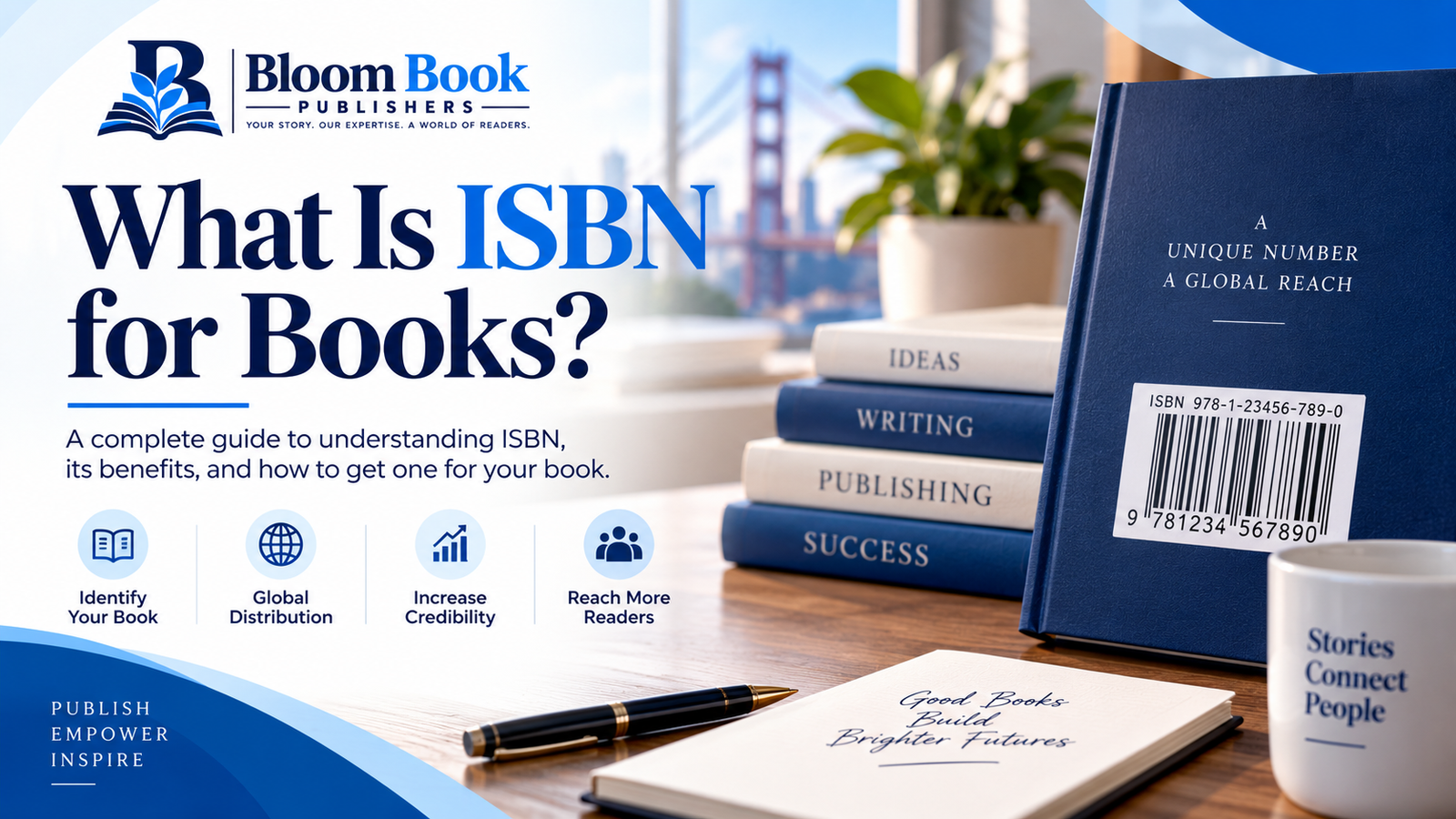
If you are planning to publish a book, you may have come across the term ISBN and wondered what it means and why it is important. An ISBN is a standard identifier used in the publishing industry to distinguish one publication from another.
ISBN stands for International Standard Book Number. It is a unique number used to identify a specific book, edition, and format. Publishers, bookstores, libraries, retailers, and other organizations in the book supply chain use ISBNs for ordering, listing, sales records, stock control, and cataloging.
Modern ISBNs contain 13 digits. Before January 1, 2007, ISBNs were 10 digits long. The current ISBN system uses 13 digit numbers made up of several elements, including a prefix, registration group, registrant, publication element, and check digit.
What Does ISBN Stand For?
ISBN stands for International Standard Book Number.
The ISBN system provides a standardized way to identify qualifying text based publications. Instead of relying only on the title or author’s name, an ISBN gives a specific publication a unique identifier that can be used by different parts of the publishing and distribution industry.
For example, a book may be published as a hardcover, paperback, EPUB, or PDF. Different product forms can be identified separately because they represent different versions of the publication.
This makes ISBN especially useful when an author plans to publish the same book in multiple formats.
What Is an ISBN Used For?
An ISBN is primarily used as a product identifier for books and other qualifying publications.
Publishers, booksellers, libraries, internet retailers, and other supply chain participants can use ISBNs for:
- Ordering books
- Listing publications
- Maintaining sales records
- Managing stock
- Cataloging books
- Identifying specific editions
- Distinguishing different formats
- Managing book metadata
The ISBN helps identify a particular publication so that different organizations can recognize and manage the correct book or edition.
For authors, this means an ISBN can become an important part of preparing a book for professional distribution.
How Many Digits Are in an ISBN?
A modern ISBN contains 13 digits.
ISBNs were previously 10 digits long. The international system changed to 13 digit ISBNs beginning January 1, 2007.
A 13 digit ISBN is made up of five elements:
1. Prefix Element
The prefix is currently either 978 or 979 and consists of three digits.
2. Registration Group Element
This element identifies a particular country, geographical region, or language area participating in the ISBN system.
3. Registrant Element
The registrant element identifies the publisher or imprint.
4. Publication Element
This element identifies a particular edition and format of a specific title.
5. Check Digit
The final digit is used to validate the ISBN mathematically.
Together, these elements create the complete ISBN assigned to a publication.
Does Every Format of a Book Need a Different ISBN?
Different formats of the same book can require separate ISBNs.
For example, imagine an author publishes one title in three formats:
- Hardcover
- Paperback
- EPUB ebook
Each product form can have its own ISBN because the ISBN system identifies individual product forms separately.
This distinction helps retailers, libraries, publishers, and distributors keep accurate records for each version of a book.
It can also be important for authors who plan to release their books in both physical and digital formats.
Where Can You Find an ISBN in a Book?
The ISBN is commonly printed on the copyright or publication information page of a book. It can also appear near the barcode on the back cover of a printed book.
When you look at the back of a commercially published book, you will often see a barcode with a 13 digit number printed underneath or nearby. The number is the ISBN, while the barcode is the machine readable representation.
Authors preparing a manuscript for publication should make sure the final book files are professionally prepared and that the publication information is correctly presented.
Is an ISBN the Same as a Barcode?
No. An ISBN and a barcode are not exactly the same thing.
The ISBN is the numerical identifier assigned to a publication. A barcode is a machine readable representation that can be scanned by compatible systems.
An ISBN can be represented in barcode form, which helps retailers and other businesses process book information more efficiently.
Therefore, when you see an ISBN printed underneath a barcode on a book, the ISBN is the identification number while the barcode allows that information to be scanned.
Does an ISBN Protect Copyright?
No. An ISBN does not provide copyright protection.
An ISBN is an identification system. It helps identify a publication, but it does not establish copyright ownership or provide legal copyright protection.
Copyright and ISBN serve different purposes.
Copyright relates to legal rights associated with an original creative work, while an ISBN helps identify a publication within the publishing and distribution system.
This distinction is important for new authors because obtaining an ISBN should not be confused with registering or protecting copyright.
Who Applies for an ISBN?
The publisher of a book is normally responsible for applying for the ISBN.
The publisher can be an organization, company, group, or individual responsible for initiating the production of a publication. In some self publishing situations, the author may be considered the publisher.
The exact process for obtaining an ISBN varies between countries. Authors and publishers should therefore check with the relevant national ISBN agency for specific requirements.
Why Is an ISBN Important for Authors?
An ISBN helps identify a book throughout different stages of publishing and distribution.
For example, an author may publish one title in paperback, hardcover, and ebook formats. Keeping these versions separately identified makes it easier for publishers, retailers, libraries, and distributors to manage each product.
An ISBN can also become important when a book is prepared for distribution through bookstores, online retailers, libraries, and other channels.
However, an ISBN is only one part of the publishing process. A professional book also needs proper editing, proofreading, formatting, cover design, publishing, distribution, and marketing.
ISBN and Book Publishing
ISBN information becomes especially relevant when moving from a completed manuscript to a professionally published book.
Before publication, an author may need to complete several stages, including manuscript development, editing, proofreading, formatting, cover design, and final publishing.
A professional book publishing service can help authors move through these stages and prepare their books for publication and distribution.
Understanding the ISBN requirements early can also make the publishing process more organized, particularly when an author plans to release a book in more than one format.
What Happens Before an ISBN Is Assigned?
An ISBN is associated with a specific publication, so authors should have a clear understanding of what they plan to publish.
The publishing process can involve several important steps.
Manuscript Preparation
The manuscript should be complete and ready for professional review. Authors should make sure the content is organized and prepared for the intended audience.
Editing and Proofreading
Editing helps improve the structure, clarity, grammar, consistency, and readability of a manuscript. Proofreading focuses on identifying remaining errors before publication.
Professional book editing services can help authors prepare their manuscripts for publication.
Book Formatting
The interior of a book needs to be formatted according to its intended format. Print books and ebooks can have different formatting requirements.
Cover Design
The cover is another important part of a book’s presentation. It should be prepared according to the book’s subject, audience, and intended format.
Publishing and Distribution
Once the manuscript, interior, and cover are ready, the book can move toward publication and distribution.
The ISBN then helps identify the resulting publication within the wider book supply chain.
Do Ebooks Have ISBNs?
Ebooks can have ISBNs, and different digital product forms can be identified separately.
For example, EPUB and PDF are different digital product forms. ISBN guidance recommends that different product forms be identified separately.
However, specific ISBN requirements can vary depending on the platform and distribution arrangement being used.
Authors preparing digital editions should check the requirements of their selected publishing and distribution platforms before assigning or using an ISBN.
Do Audiobooks Have ISBNs?
Audiobooks are another form of book content with their own publishing and distribution considerations.
Because an audiobook is a different product form from a paperback or hardcover, authors should consider the identification requirements that apply to the specific audiobook product and distribution arrangement.
Authors planning to release multiple versions of their book should organize their editions and formats carefully from the beginning.
ISBN 10 vs ISBN 13
The main difference between ISBN 10 and ISBN 13 is the number of digits and the current standard.
ISBN 10 was the older format used before the international system moved to 13 digit ISBNs. Since January 1, 2007, newly assigned ISBNs have been 13 digits.
Modern ISBNs begin with a three digit prefix, currently 978 or 979, followed by the registration group, registrant, publication, and check digit elements.
If you find a 10 digit ISBN in an older book, it does not mean that the book is incorrectly identified. It may simply have been published under the previous ISBN standard.
Is an ISBN Required for Every Book?
Not every publication necessarily falls within the scope of the ISBN system.
ISBNs are intended for qualifying monographic publications. Serial publications such as journals and newspapers generally use different identification systems.
Whether an ISBN is needed can also depend on how a publication will be distributed and the requirements of the relevant publisher, retailer, distributor, or platform.
Authors who are unsure whether their publication requires an ISBN should check the requirements that apply to their specific type of publication.
What Information Is Connected to an ISBN?
An ISBN is more than just a number in a publishing database.
Publication metadata can be associated with an ISBN, including information such as the title, author, format, and other details about the publication.
This information helps books appear correctly in catalogs, databases, retailer systems, library records, and other publishing platforms.
Accurate metadata is therefore an important part of preparing a book for distribution.
Can One ISBN Be Used for Different Editions?
An ISBN identifies a specific publication, edition, and format.
When important characteristics of a publication change, a new ISBN may be required. For example, changes to the product form, language, edition, publisher or imprint, or certain digital usage restrictions can affect ISBN requirements.
Authors publishing multiple editions or formats should keep their ISBN records organized to avoid confusion during distribution.
Frequently Asked Questions
What does ISBN stand for?
ISBN stands for International Standard Book Number. It is a unique identifier used to identify a specific publication, edition, and format.
How many digits does an ISBN have?
Modern ISBNs have 13 digits. ISBNs were 10 digits before the international system changed to 13 digits in 2007.
Is an ISBN the same as a barcode?
No. An ISBN is a numerical identifier, while a barcode is a machine readable representation that can be scanned by compatible systems.
Does an ISBN protect copyright?
No. An ISBN identifies a publication but does not provide copyright protection.
Does every book format have its own ISBN?
Different product forms, such as paperback, hardcover, EPUB, and PDF, can be identified separately with different ISBNs.
Do ebooks have ISBNs?
Ebooks can have ISBNs. Requirements can vary depending on the digital format and distribution platform.
Where can I find an ISBN?
For a printed book, the ISBN is commonly found on the copyright or publication information page and may also appear near the barcode on the back cover.
Who applies for an ISBN?
The publisher normally applies for an ISBN. In self publishing, the author may be considered the publisher and can apply through the relevant national ISBN agency.
Can an ISBN be reused?
An ISBN assigned to one publication should not simply be reused for another publication. Changes to important publication characteristics may also require a new ISBN.
Conclusion
An ISBN is an International Standard Book Number used to identify a specific publication, edition, and format. Modern ISBNs contain 13 digits and are widely used by publishers, booksellers, libraries, retailers, and other organizations involved in the book supply chain.
For authors, understanding ISBNs is an important part of understanding the publishing process. However, an ISBN is only one component of publishing a book. Editing, proofreading, formatting, cover design, publishing, distribution, and marketing are also important parts of preparing a professional publication.
If you are preparing your manuscript for publication, understanding how ISBNs work can help you make better decisions about your book’s format, edition, and distribution before publication.